

NTOU Distinguished Professor Wen-Yi Hung & Interdisciplinarity Team's OLED Research Published in Top Journal “Nature Photonics” for 3 Consecutive Year
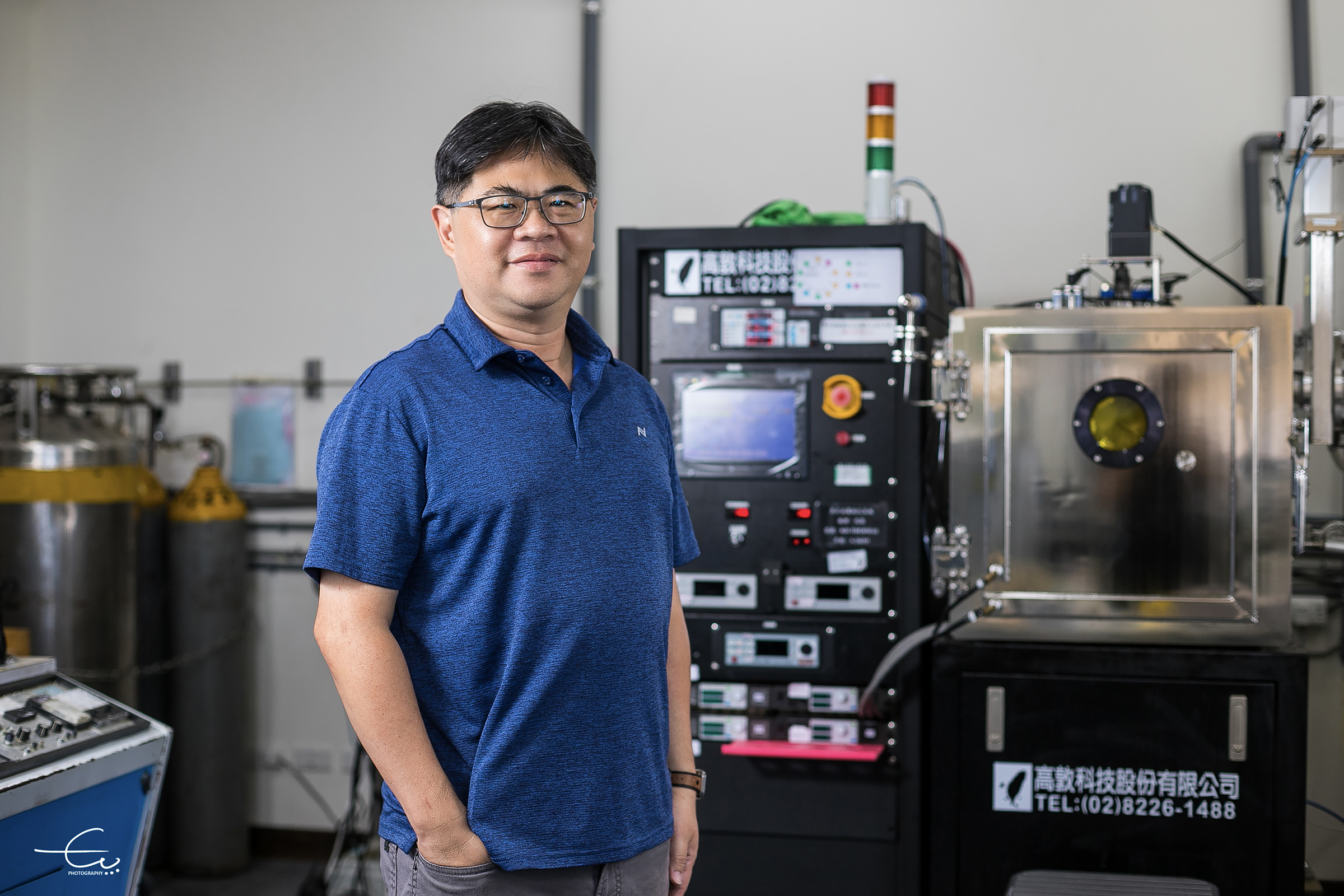
Dr. Wen-Yi Hung (洪文誼), currently Distinguished Professor of Department of Optoelectronics and Materials Technology at National Taiwan Ocean University (NTOU,) collaborated with interdisciplinarity scholars on organic light-emitting diode (OLED) research. Prof. Hung joined the research team led by Professor Pi-Tai Chou, Department of Chemistry, National Taiwan University, and achieved significant breakthroughs, including breaking the world record of organic strong light emission and unraveling the light-emitting mechanisms in highly efficient OLED materials. These outstanding research results have been officially published in the top international optoelectronics journal “Nature Photonics” for three consecutive years.

Prof. Wen-Yi Hung’s research interests cover fundamental science of organic materials/devices and innovation in technologies and applications. Applying organic materials in near-infrared wavelengths of 1000-1700 nm, commonly known as NIR(II) light, is one of Prof. Hung’s recent research topics. In contrast to traditional light-emitting materials, organic materials are not limited by slow response time, scarce resources, and bio-incompatibility. However, according to “energy gap law,” the so-called “energy gap” causes the excitons to turn into heat without emission and makes organic molecular material in NIR(II) region commonly have negligible emission.
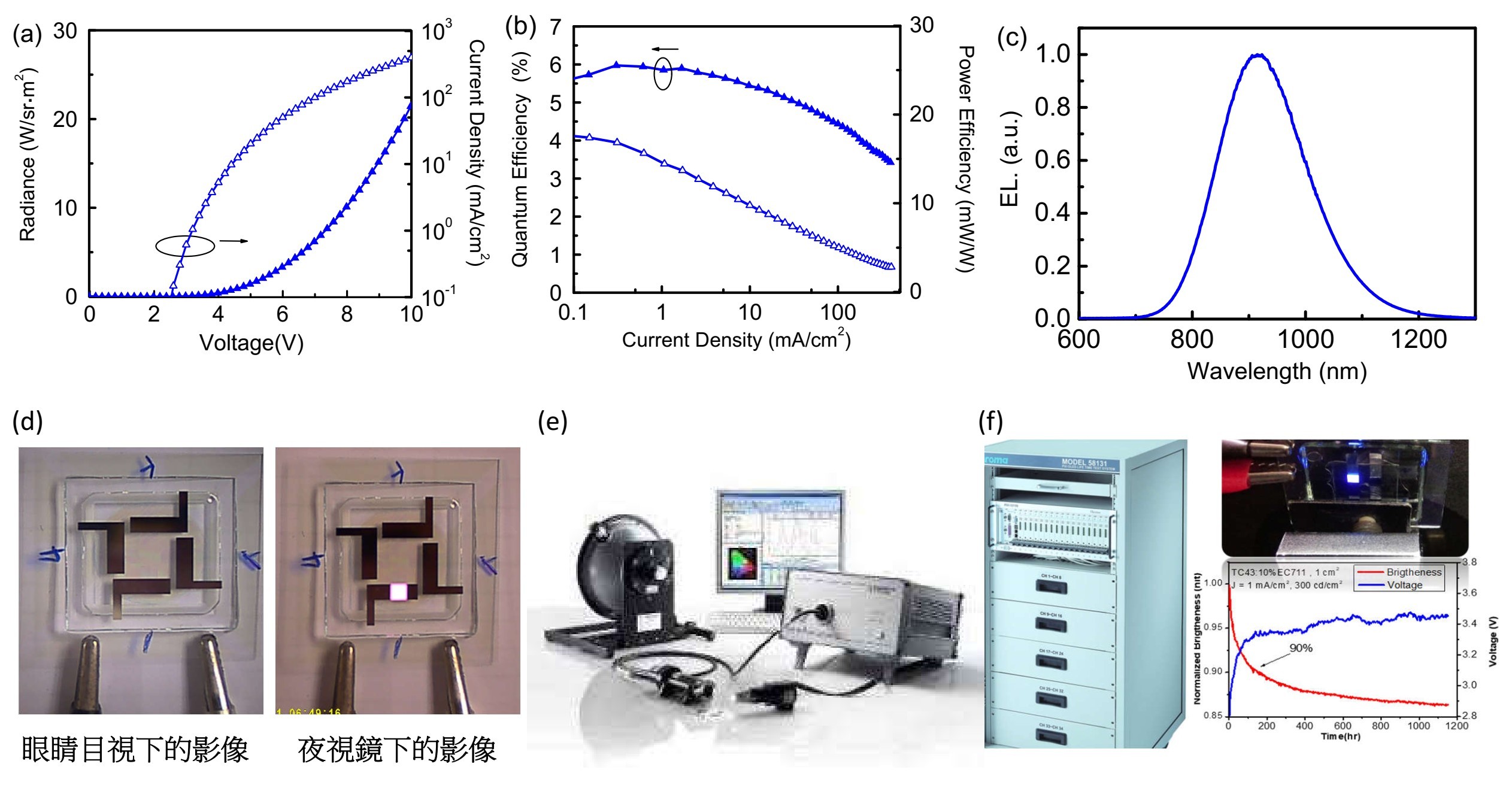
In 2022, the research team successfully revisited the theory of the energy gap law to quantify the contribution of each coupled vibrational mode to non-radiative transitions. Through designing and synthesizing a new series of self-assembled Pt(II) complexes, the corresponding OLEDs reached an emission peak at approximately 1,000 nm with an internal quantum yield of as high as 21% and an external quantum efficiency of 4.2%. The contribution successfully broke the world record published in Nature Photonics by the same group in 2020.
Aside from researching OLEDs in the NIR(II) window, Prof. Hung also cooperated with Professor Pi-Tai Chou’s group to gain new insight regarding the origin of thermally activated delayed fluorescence (TADF.) In 2021, the team resolved critical light-emitting mechanisms in multiple resonance-induced thermally activated delayed fluorescence (MR-TADF) emitters. By investigating DABNA-1 together with other new MR materials, the group opened the way to high-performance OLEDs.
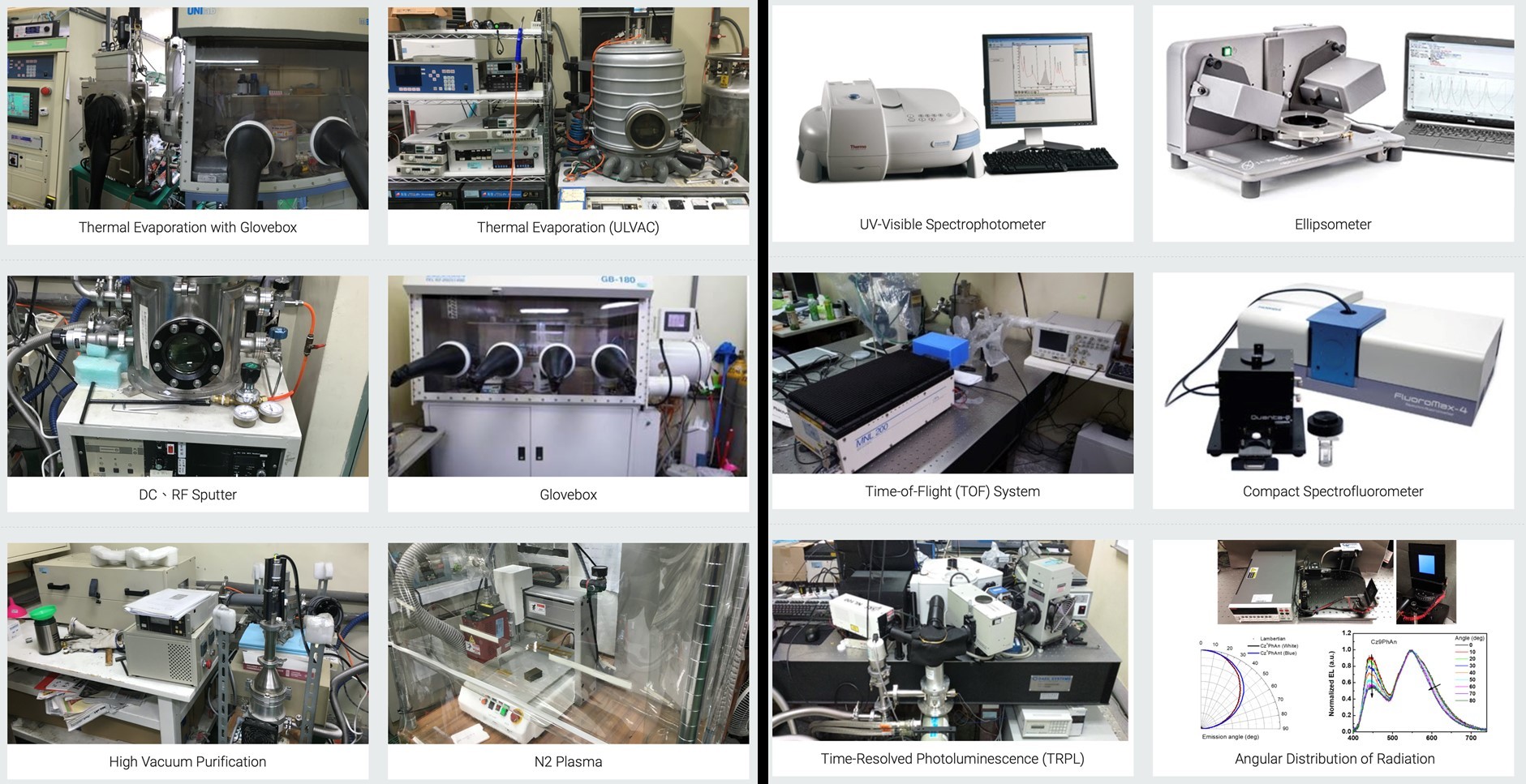
“Only by integrating expertise from various fields can we maintain a competitive edge against world-class research teams,” Prof. Hung stressed. The optoelectronic physical properties measurements conducted at NTOU by Prof. Hung are the key to completing Professor Pi-Tai Chou’s research on outstanding Next-Generation OLED materials.

Recently, Prof. Hung not only got a breakthrough in narrowband OLED, but he would also keep challenging the emission at 1700-2000 nm region with the interdisciplinarity research team.
Breakthroughs of Prof. Wen-Yi Hung and the interdisciplinarity research team:
The role of host–guest interactions in organic emitters employing MR-TADF
Overcoming the energy gap law in near-infrared OLEDs by exciton–vibration decoupling