

Advancing Taiwan's Mold Industry: Collaboration to Build a Resilient Supply Chain
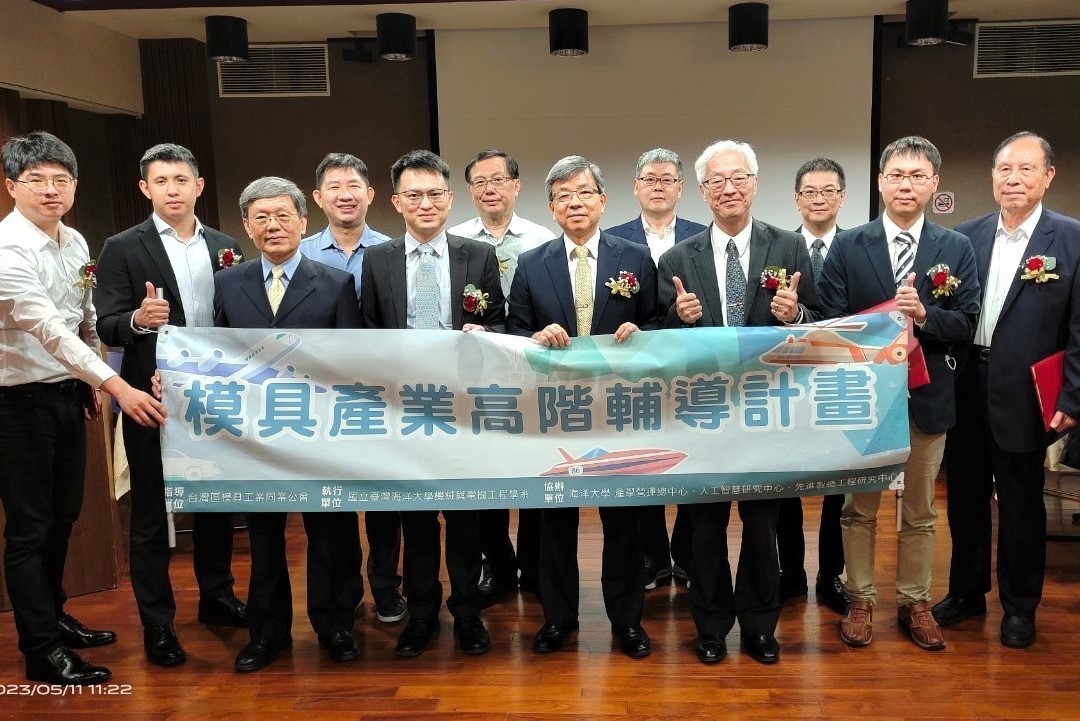
The quality of molds plays a vital role in production efficiency and a company's competitiveness. To support the advanced transformation and upgrading of Taiwan's mold industry, the National Taiwan Ocean University (NTOU) is implementing the "Advanced Mold Industry Guidance Program" under the Ministry of Economic Affairs' Industrial Development Bureau. NTOU has recently joined forces with eight prominent industry players through signed cooperation agreements. The participating companies include Likw Enterprise Corporation, Lioho Machine Works Ltd., Ming Horng Industrial Co. Ltd., Bon Technology Aluminum Co. Ltd., DynaPlus Incorporated Co. Ltd., Fu Chia Metal Casting Co. Ltd., Yeh Hsin Hsueh Industrial Co. Ltd., and Basso Industry Corp. The objective is to foster collaboration between academia, industry, and government, aiming to build a robust and resilient supply chain that will enhance Taiwan's international competitiveness in the mold industry.
The mold industry faces several challenges, including global market price competition, a shortage of skilled labor, and the need to comply with increasingly stringent environmental regulations in line with the trend towards achieving net-zero carbon emissions by 2050. Enterprises are also grappling with rising demands for environmental protection, necessitating the allocation of additional resources to meet corresponding standards.
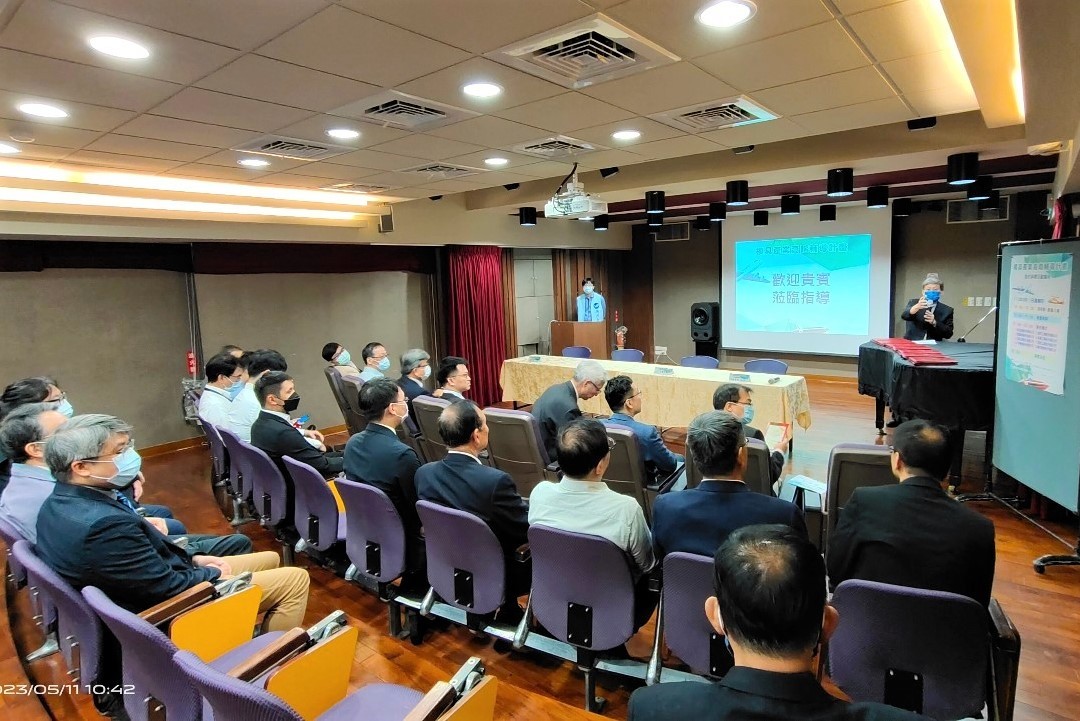
The Opening of the Contract Signing Event
Professor Juang Shuei-Wan (莊水旺), the principal investigator of the project, emphasized the crucial role of well-made molds in achieving high yield rates. He highlighted that the mold industry is a foundational sector in Taiwan, playing an indispensable part in various industrial supply chains. However, many technical details and process methods in die-casting, such as temperature, material, cooling time, and spray time, have traditionally relied heavily on the experience and memory of seasoned craftsmen, making knowledge transfer a challenge. By systematically incorporating AI and digital technologies, production parameters can be tracked and documented regularly, leading to stable production yields and reduced costs.
Professor Nan Fan-Hua (冉繁華), Vice President of NTOU, expressed gratitude to Professor Juang for spearheading the integration efforts and forming a team. He stated that NTOU is eager to collaborate with the Ministry of Economic Affairs and has just begun by signing contracts with the eight industry leaders. The university will prioritize research and development of new products. Professor Nan Fan-Hua also expressed anticipation for future collaboration with NTOU's AI Research Center (AIRC) to optimize mold production processes through AI visualization, contributing to digital transformation and intelligence in the industry.
Chang Shang-Chun (張尚鈞), a senior specialist from the Industrial Development Bureau, extended gratitude to Professor Juang for his enthusiastic assistance and frequent visits to the bureau. The project's execution involves international linkages, EU CBAM carbon tariffs, and subsequent course arrangements to help companies assess their carbon emissions and promote energy-saving and carbon reduction concepts. The Industrial Development Bureau will closely collaborate with NTOU to promote the technological and product upgrade guidance in the mold industry. They also aim to identify more industry players in need and facilitate mutual learning and improvement.
Lin Dang-Cai (林當財), Executive Director of the Taiwan Mold Industry Association, noted that the mold industry has diverse applications, primarily divided into four areas: plastic molding, stamping, die-casting, and materials. Previously, the industry relied on engineers' experience, which had its limitations. However, through the introduction of AI in this collaborative project, systematic data collection and analysis can enhance the overall technical level of the industry. This advancement will assist companies in adopting higher-level technologies, ensuring sustainable growth, and maintaining enduring competitiveness.
During the contract signing event, representatives from the Industrial Development Bureau's Metal Machinery Division, the Industrial Technology Research Institute, and the Taiwan Mold Industry Association engaged in an in-depth discussion regarding the current challenges faced by the mold industry and the improvement of technology and talent cultivation.